

Mor Jal Mor Maati (MJMM)
Major Achievements: The project focussed on building water resilience and promoting sustainable agriculture through integrated water resource development. A total of 25 farm ponds were constructed, creating a harvesting potential of 20,475 cubic metres. In addition, desiltation of a community pond restored 4,447.35 cubic metres of storage capacity, enhancing water availability for agriculture and fish farming.
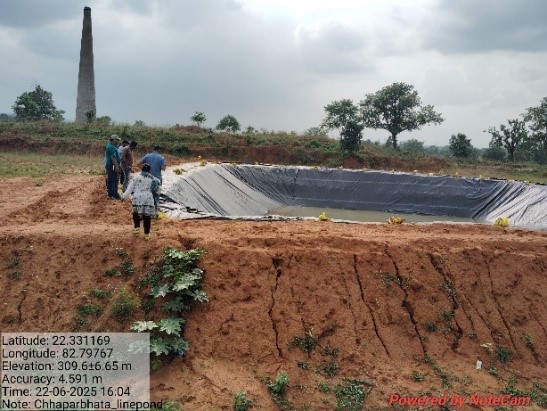
To further strengthen irrigation efficiency, two ponds were lined, securing 3,572 cubic metres of water for extended use. Forty-seven farmers adopted portable solar lift irrigation systems, reducing fuel costs and promoting clean energy, while 70 farmers were equipped with micro-irrigation systems, improving water use efficiency and increasing cropping intensity. Collectively, these interventions will create 28,494 cubic metres of additional water storage capacity and ensure improved irrigation for at least 115 acres of farmland
In parallel, pisciculture was introduced as a complementary livelihood, with support provided to 10 farmers across 6 villages. They were provided with Rohu and Catla fish seeds along with inputs like netting, training, and livelihood support to promote fish-based income opportunities